Textile care and materials guide
A Practical Guide to More Sustainable Linen Pillowcases
Linen pillowcases can offer a breathable, tactile alternative to familiar cotton bedding, but a natural fiber is not automatically a low-impact one. Learn what to check—from flax sourcing and textile certifications to construction and laundry habits—so you can make a more informed choice and help your pillowcases last.
Published October 14, 2026
There is an appealing simplicity to linen: a relaxed surface, a little natural texture, and a fabric that feels comfortable without looking overly polished. Linen pillowcases are also often described as breathable and moisture-managing, qualities that can make them pleasant for everyday use. But when sustainability is the question, appearance and fiber names are only the beginning.
The environmental picture depends on more than whether a textile comes from a plant. It can include how the flax was grown, how the fiber was processed and dyed, what information a certification actually verifies, how long the finished fabric remains useful, and what happens each time it goes through the wash. No single label or feature tells the whole story.
A thoughtful approach is practical rather than perfectionist: look for clear, specific information; choose construction and care instructions that fit your household; and maintain the fabric in a way that avoids unnecessary wear. These steps can help you assess linen pillowcases with more confidence and make the most of the textiles you already own.
Start with the fiber—but don’t stop there
Linen is made from flax, a plant grown for its usable stem fibers. As a natural cellulosic fiber, flax can be spun into yarn and woven into fabric with a characteristic texture. Linen’s feel varies according to the fiber, yarn, weave, finishing and weight, so “linen” alone does not tell you whether a particular pillowcase will be crisp, supple, fine or substantial.
Flax is sometimes presented as an inherently sustainable crop. That description needs context. Agricultural impacts depend on where and how it is grown, including land and water conditions, farming practices, and the inputs used. Processing matters, too: turning harvested flax into textile fiber and finished cloth involves multiple steps, and their impacts can vary by location and method. A plant-based origin can be relevant, but it is not a complete environmental assessment.
Read the material description closely. It should make clear whether the pillowcase is 100% linen or a blend, and ideally identify the fiber’s origin separately from where the textile was woven or sewn. A statement such as “flax grown in France, linen woven in Portugal” gives more traceability than a broad claim of European linen, though it still does not describe every production step. Specificity is useful; it is not the same as proof of lower impact.
Pay attention to the details behind appealing phrases such as “natural,” “earth-friendly” or “responsibly made.” Ask what the claim refers to: the fiber, the farm, the dyeing process, the finished product, packaging, or the brand’s wider operations. A precise statement is easier to evaluate than a general promise.
Understand what a certification can—and cannot—tell you
Textile certifications can make certain claims easier to verify, but each standard has its own scope and requirements. Before treating a logo as a blanket assurance, check what it covers, which organization administers it, and whether the specific product or facility is included. A certification may address fiber sourcing, processing, chemical inputs, environmental management or social criteria, but not necessarily all of these at once.
For example, the Global Organic Textile Standard, commonly abbreviated GOTS, sets requirements for organic fibers and the processing of textile products within its certification system. If a product is described as GOTS certified, look for information that allows you to confirm the claim applies to that product and understand which certified entity is named. The phrase “made with organic flax” alone is not equivalent to a finished product certification.
Other standards may focus on different aspects of textile safety or production. Do not assume that two certification marks are interchangeable, or that a product bearing one mark has been assessed for every environmental or labor issue you care about. When details are limited, consult the certifier’s own current guidance rather than relying only on a short marketing description.
Certification is one useful piece of evidence, not a substitute for clear product information. A strong description identifies the fiber composition, the relevant locations or stages of production where known, and the specific standard being claimed. It should avoid implying that a single badge settles the whole sustainability question.
Look closely at construction and expected use
Durability is a meaningful part of a more considered textile choice. If pillowcases remain comfortable and serviceable through repeated use, they may not need to be replaced as quickly as a fabric that wears out, loses its shape or becomes unpleasant to sleep on. No fabric lasts forever, and actual lifespan depends on the quality of the material, construction, frequency of laundering and care.
Examine the practical details rather than treating a high price or refined finish as a durability guarantee. Check the stated fiber content, seam construction, edge finishing and whether the fabric weight or weave is described. Neat stitching and securely finished seams can support regular use, but the best choice is also one that suits how often you wash bedding and how you prefer to care for it.
Linen’s surface can have visible slubs and natural variation. These characteristics are not necessarily defects, but they should not be confused with proof of superior quality either. Think about your own tolerance for texture and creasing. A pillowcase that you find comfortable and can care for easily is more likely to stay in regular rotation than one chosen only for its sustainability claims.
Fit matters as well. A case that is too tight can put stress on seams; one that is very loose may bunch during sleep. Check pillow dimensions and product sizing before choosing. If you are comparing products, read the included care instructions alongside the material description rather than relying on a single headline claim.
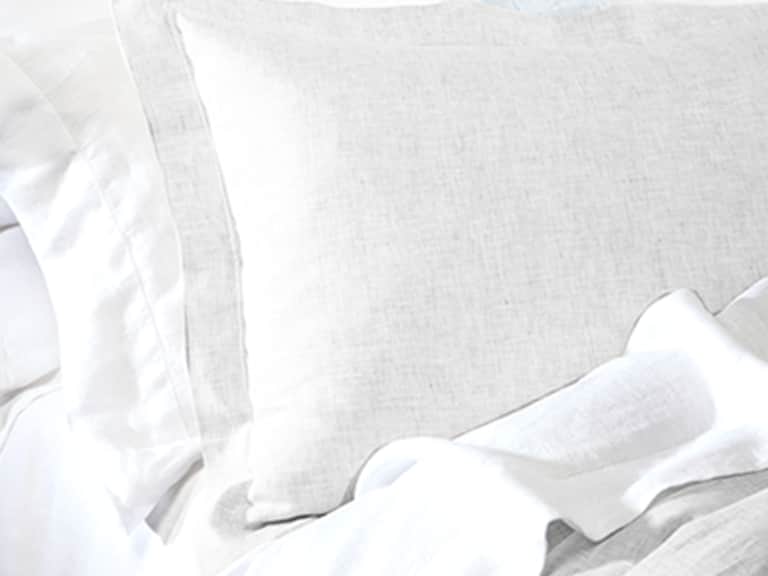
For an example of the kind of information a shopper might review, the DownTown Company Layla Linen Pillowcases are described as 100% flax linen, woven in Portugal, and available in Standard/Queen and King sizes. Their published details describe the fabric and origin, while any wider environmental judgment would still require more information about farming, processing and production. The useful lesson is to treat product specifications as starting points for questions, not as a complete sustainability verdict.
Care is part of the sustainability equation
Even a carefully sourced pillowcase can have a short useful life if it is washed harshly or repeatedly exposed to more heat than necessary. Laundry also uses water and energy, so thoughtful care can support both fabric longevity and more restrained household routines. The aim is not to underwash bedding, but to follow sensible hygiene practices without adding unnecessary cycles or aggressive treatments.
Start with the care label. Recommendations vary by product and finish, and the manufacturer’s instructions should take priority over a generic linen rule. A common gentle approach is to wash linen pillowcases with like colors, use a suitable detergent, and select a gentle cycle when the care directions allow. Avoid packing the machine so tightly that the fabric cannot move freely, and separate items with rough fasteners or heavy components that could cause abrasion.
Use detergent according to its directions rather than assuming that more soap means a cleaner result. Excess detergent may leave residue, while unnecessary bleach or strong stain treatments can weaken or discolor fabric. Fabric softener is not automatically needed: it can leave a coating on some textiles and may conflict with a product’s care instructions. If you are dealing with a stain, address it promptly and test any treatment on an inconspicuous area when appropriate.
Drying is another important decision. High heat can contribute to wear, shrinkage or a harsher hand, depending on the fabric and finish. If the care label permits, line drying or air drying can avoid some dryer energy use. When a dryer is practical, use the lowest suitable heat and remove the pillowcases once dry rather than leaving them tumbling for an extended period. Avoid wringing the fabric, which can strain yarns and seams.
Linen naturally creases. Ironing is a matter of preference, not a measure of cleanliness or quality. If you like a smoother finish, follow the care label’s recommended temperature and iron while the fabric is slightly damp if the instructions allow. If you enjoy a relaxed appearance, skipping the iron saves effort and energy. Choose a routine you can sustain rather than one that makes the fabric feel like a burden.
Wash thoughtfully without compromising hygiene
Pillowcases collect oils, perspiration, skin-care products and ordinary household dust through use. How frequently to wash them depends on personal needs, climate, sleep habits and any health or care advice relevant to your household. People with allergies, sensitive skin or other specific concerns may prefer a different routine from someone with different circumstances.
Rather than following an arbitrary schedule, consider how the pillowcase looks and feels, whether it has been exposed to illness or a spill, and what your household hygiene practices require. Promptly changing a soiled case is sensible; laundering every textile after a single brief use may not always be necessary. Keep clean pillowcases dry and store them in a clean place so they stay ready for use.
If you are washing several items, group similar colors and care requirements together. This helps reduce the risk of dye transfer and makes it easier to select an appropriate cycle. Turning a pillowcase inside out may reduce friction on the visible surface, particularly if it has decorative details, but the care label should guide any special handling.
Balance linen’s benefits with realistic trade-offs
Linen can be an appealing bedding fiber for people who value a textured hand and breathable feel. Its open structure and fiber characteristics can support airflow and moisture movement, though the experience depends on the weave, fabric weight, room conditions and individual comfort. It is reasonable to say that many people appreciate linen’s feel; it is less useful to promise that it will solve every problem related to heat or sleep.
There are trade-offs. Some linen feels crisp at first and softens with wear and washing; the pace of that change varies. The natural texture may crease more visibly than some tightly finished cotton fabrics. Linen can also require careful attention to washing and drying guidance, particularly if it has a special finish, embroidery or color treatment. These are not reasons to dismiss it, but they belong in a fair comparison.
When comparing linen pillowcases with cotton or a blend, consider the whole experience: material transparency, comfort, expected use, care demands and how likely you are to keep using the item. Thread count alone does not settle quality, especially when comparing different fibers and weaves. A sensible decision weighs multiple details instead of letting one number or fashionable label dominate.
A practical checklist before you choose
Use this checklist to turn broad sustainability language into questions you can actually answer:
- Fiber: Is the pillowcase 100% linen, or is it a blend? Is the fiber content stated clearly?
- Origin: Does the description distinguish where flax was grown from where the linen was woven or finished?
- Certification: Is a named standard provided, and can you verify that the claim applies to the product or relevant facility?
- Processing: Is there useful information about dyeing, finishing or other production stages, rather than a broad, unsupported environmental claim?
- Construction: Are the seams and edges finished for regular use, and does the size suit your pillow?
- Care: Can you follow the care instructions with the laundry routine and equipment you actually have?
- Use over time: Is the fabric comfortable enough for you to keep using, and can it be repaired or maintained if a small problem arises?
You may not find a complete answer to every question. That does not automatically make a pillowcase a poor choice; it means you should separate what is documented from what remains unknown. Favoring transparent details over sweeping language helps you compare options more fairly.
Make longevity part of the decision
The most sustainable bedding is not necessarily the item with the most persuasive label or the most dramatic promise. It is worth considering whether the textile fits your needs well enough to remain useful. A pillowcase that is cared for gently, stored properly and used for years can offer more value than one replaced often because it never felt right or was difficult to maintain.
When a pillowcase begins to show wear, consider whether the problem can be addressed. A small seam opening may be repairable, and a stained case might still serve as a spare or be repurposed for a non-bedding use, depending on its condition. Once it is no longer suitable for its original purpose, check local textile reuse or recycling options; programs and accepted materials differ, so do not assume every household collection takes used linens.
Buying fewer textiles and using them well can be a practical sustainability strategy. It may also mean keeping existing pillowcases in service, rotating them evenly, and choosing a replacement only when there is a genuine need. Thoughtful purchasing includes asking not just whether a product sounds responsible, but whether it will work in your home for the long term.
The bottom line on sustainable linen pillowcases
Linen pillowcases bring the natural character of flax to a familiar everyday textile, but “natural” is not a full environmental assessment. To judge a sustainability claim, look for clear information about fiber content, sourcing, processing and any relevant certification. Consider construction and care instructions, too: long use depends on choosing a fabric that suits your comfort preferences and treating it in a way that helps preserve its condition.
Choose a gentle laundry routine that still meets your household’s hygiene needs, avoid unnecessary high heat, and follow the product label rather than relying on a one-size-fits-all rule. Ask what a certification covers, distinguish verified facts from marketing language, and be comfortable acknowledging where information is missing.
That approach is neither complicated nor perfect. It is simply a more informed way to evaluate sustainable bedding—one that takes the fiber seriously, recognizes the limits of labels, and gives everyday care a role in helping useful textiles last.